What’s Breaking In Fuel Dispatch?

Is your team still slinging spreadsheets and working the phones nonstop? Explore how these reactive, manual processes slow operations, add unnecessary costs, and limit your ability to grow.

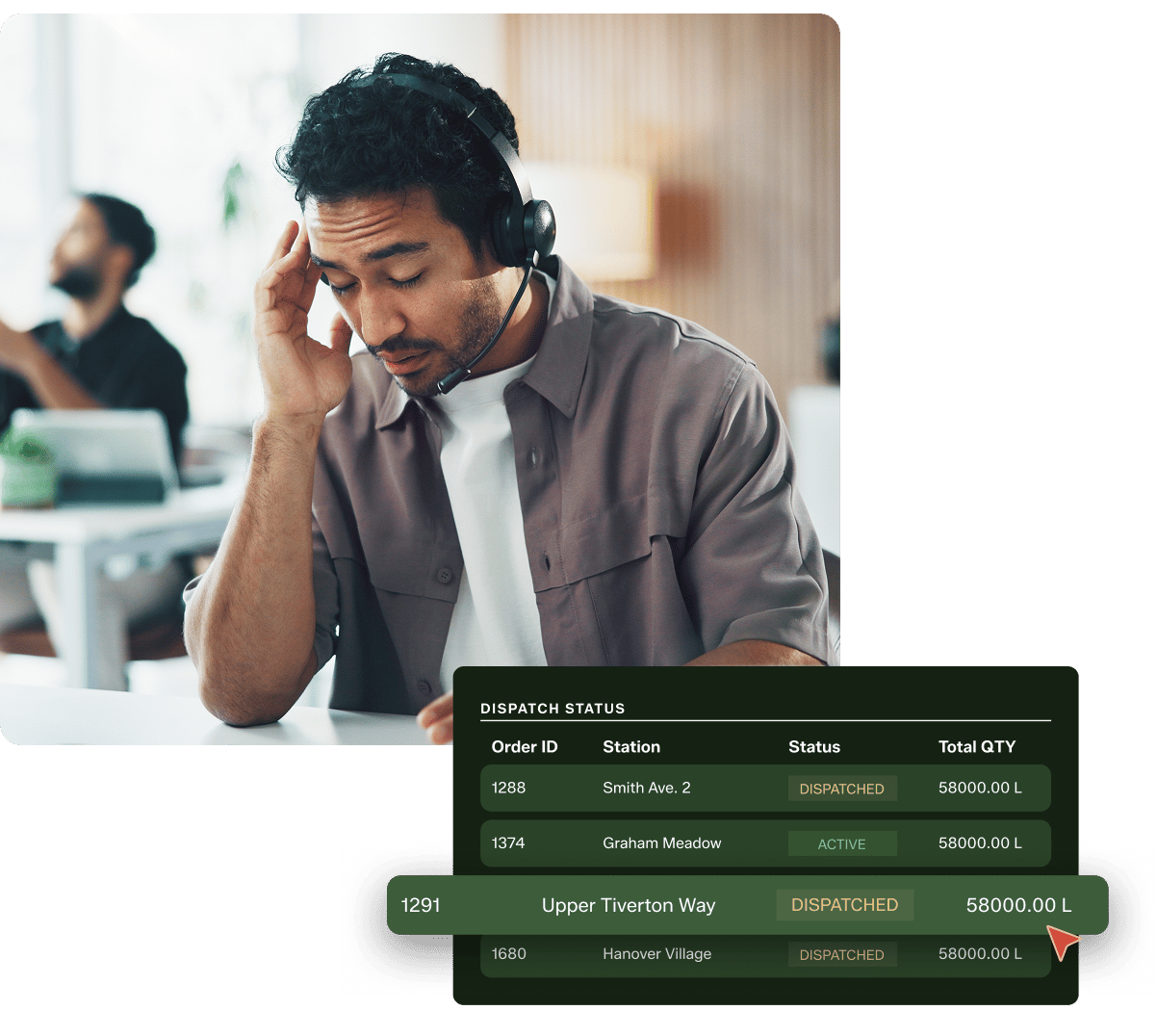
DispatchDilemma_Hero

The Cost and Risks of Manual Decisions

When dispatch depends on reactive planning and disconnected systems, small decisions create outsized operational and financial impact.

No such thing as a minor mistake

Just a little routing error, right? Think again. While your team is scrambling to fix it, it can lead to a missed delivery window, then spiral into wasted miles, margin erosion, SLA penalties, or a lost customer.

Constant reshuffling of the dispatch deck

Manual dispatch teams are often stuck in reactive replanning. The repercussions of a terminal delay or a driver change ripple across the whole network. Even the most skilled spreadsheet wizards may not be able to prevent further delays.

Critical knowledge held by a few key players 

Many manual operations rely on seasoned experts who’ve developed muscle memory of routes, terminals, customers, and exceptions. That trapped tribal knowledge makes it to scale and creates a huge learning gap when they leave or retire. 

Operational cost leaks are tricky to locate

Without real-time visibility into routing, utilization, and cost per delivery, inefficiencies are difficult to identify, let alone improve. Fuel, labor, and margin losses often go unnoticed until they become significant.

Good luck getting ahead of planning

Instead of advance planning and optimizing the network, dispatchers spend their day resolving emerging issues and manually adjusting schedules just to keep operations moving.

The added strain of growth and change

As fleets, routes, and delivery demands grow, manual dispatch processes add chaos that’s unsustainable. More volume means more stress and more room for costly errors.

DispatchDilemma_Accordion

Pressure Is Building on Fuel Hauling Teams

From the dispatch office to the accounting department, manual processes create headaches for growing fuel carriers and 3PLs.

Every route change, driver switch, or rush delivery puts dispatchers on their heels. It’s a nonstop scramble of manual adjustments just to keep the network moving.

Even small errors in manual dispatch can lead to delays and inconsistent delivery performance. The stress of maintaining reliable service with tight margins is always weighing on fuel logistics teams.

Without real-time visibility or reliable data, it’s hard to get a handle on fleet utilization, driver productivity, or SLA compliance. Any performance insight is held by a few seasoned team members.

Costs are already high, and fuel prices can move quickly. Hidden inefficiencies in fuel use, routing, or driver labor erode margins every day. But manual processes make the costs hard to predict or control.

Why It’s Getting Even Harder to Keep Up

$150?

Oil price volatility

Demand, inventory, and pricing are shifting daily. The result is more reactive planning, more rush decisions, and more pressure on dispatch teams to adapt.

~2%

Razor-thin margins 

Wasted miles, underutilized trucks, and delivery inefficiencies are harder to absorb. Eyes are on dispatch to protect profitability.

238K

Too many open spots

With nearly 238,000 open positions persisting across the industry, operations are increasingly dependent on a shrinking (and stressed) pool of experienced dispatchers and drivers. 

14 hr max

Inflexible HOS rules

Routes and schedules must remain compliant with hours-of-service and other operational constraints, even as conditions change throughout the day.

Help Is Here

All these issues don’t have to ride on your shoulders. Discover what’s possible with an automated solution from CharIntel Dispatch.

Request a Demo
Contact Us

Discuss the unique challenges of your operation with our experts.

Let’s Talk